





Retailers say financial aid and guidance is needed
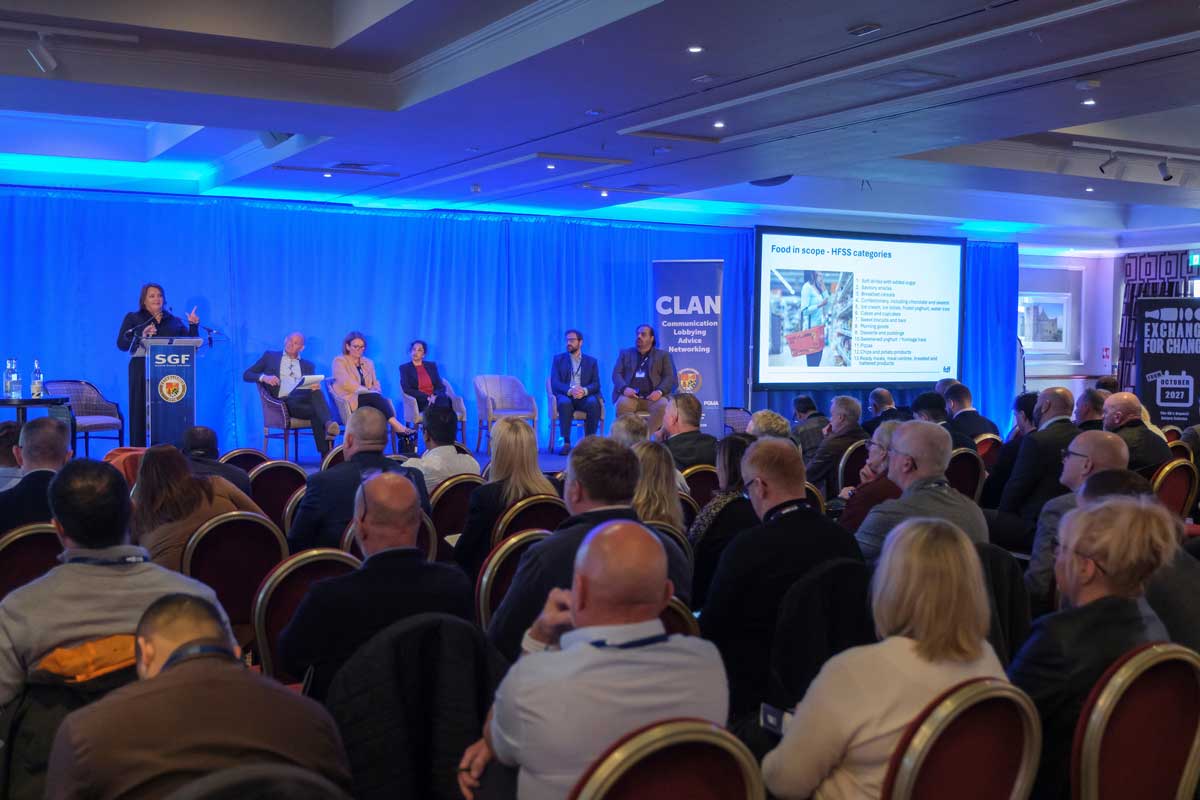
CONVENIENCE retailers have voiced their concerns about Scotland’s HFSS regulations, which come into force on 1 October.
The rules target pre-packaged food and drink categories that contribute significantly to obesity and poor diet, such as confectionery, savoury snacks, soft drinks, cakes and biscuits, desserts and ready meals.
They will apply to businesses with 50 or more employees (including franchises or symbol groups), stores with a sales floor space of 2,000sq ft or more and the restrictions apply to both physical stores and online.
The legislation restricts promotions such as multibuy offers, loyalty schemes and unlimited free refills for soft drinks with added sugar.

And qualifying businesses cannot place targeted HFSS products in prominent, impulse-buying locations such as checkouts and queueing areas, entrances and aisle ends.
During a debate at the Scottish Grocers’ Federation (SGF) Mini Summit in Falkirk last month, Shamly Sud, managing director of GHSL and co-founder of the RaceTrack chain of stores, was scathing about the lack of Government support to help retailers with the transition.
She told delegates: “The categories in scope are major ones in convenience retail. The HFSS regulations are a massive challenge because we’ve got to maintain revenue and sales. Where’s the action plan to help retailers?”
Sud spoke of the challenges and costs of having to redesign store layouts and the need to educate and train staff about what could be displayed where.
And she warned there was a danger that desirable, expensive products, such as chocolate, would be easier for shoplifters to steal if they weren’t in locations that were highly visible to store staff.
The retail boss also pointed out that consumers didn’t look to convenience stores for fresh produce or possible replacement lines such as children’s toys.
Sud said: “How are the Scottish Government going to help convenience retailers? We are guinea pigs for this policy. At a time when we face rising energy costs and struggle with business rates and the like, we need financial help.”
SGF chief executive Pete Cheema said: “While the HFSS regulations are well intentioned, they are not always straightforward to implement.
“HFSS rules add compliance costs, layout challenges and uncertainty – especially for independent stores – while price interventions elsewhere risk distorting competition. Retailers are trying to do the right thing but clarity and consistency matter.”
Khizar Raja, head of buying & negotiation at Fourseasons Wholesale, spoke of his group’s experience with HFSS regulations in England.
He said the first step was to understand the regulations and, working with suppliers and producers, establish which products were in scope and what well-performing alternatives they could offer.
He also urged Scottish retailers to get help from their wholesaler or symbol group over store design and planograms.
• Food and Drink Federation Scotland has chosen 12 businesses to receive up to £5,000 each through its Reformulation for Health Programme to help make their products healthier.
They include Aldomak, Rowan Glen, Strathmore Foods and Taylors Snacks, whose products sell across retail.